
AI SEO & Content Optimization

May 27, 2026
12 Min Read
AI SEO & Content
AI-generated content can support SEO if it is helpful, original, and properly edited.
Google does not penalize content simply because it was created with AI.
Quality, usefulness, and intent match matter more than the tool used to create the content.
Thin, repetitive, or mass-produced AI content can hurt rankings because it fails to add value.
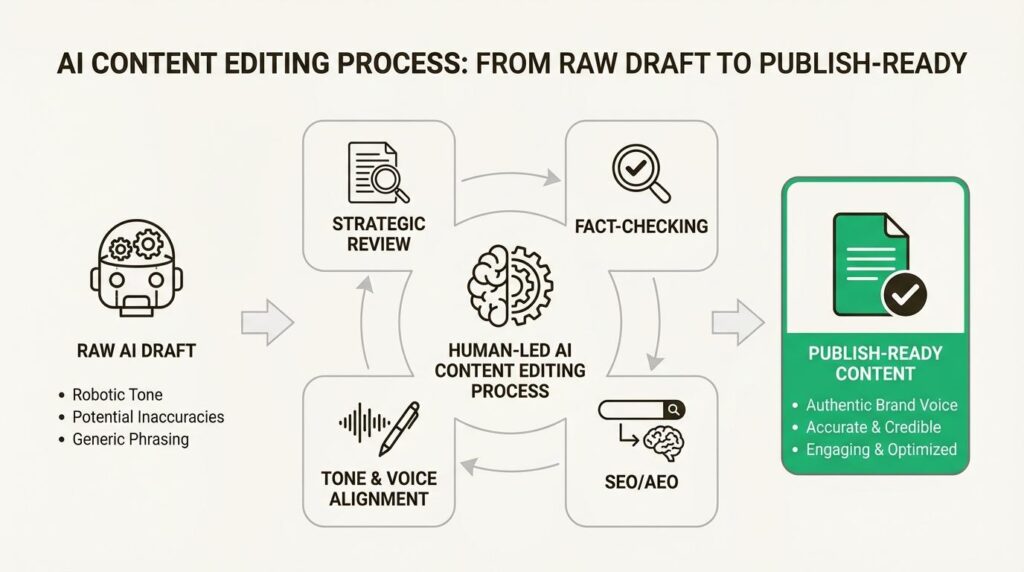
The best approach is AI-assisted drafting with human editing, fact-checking, and on-page SEO optimization.
Businesses should use AI to improve efficiency, not to replace strategy, expertise, or editorial judgment.
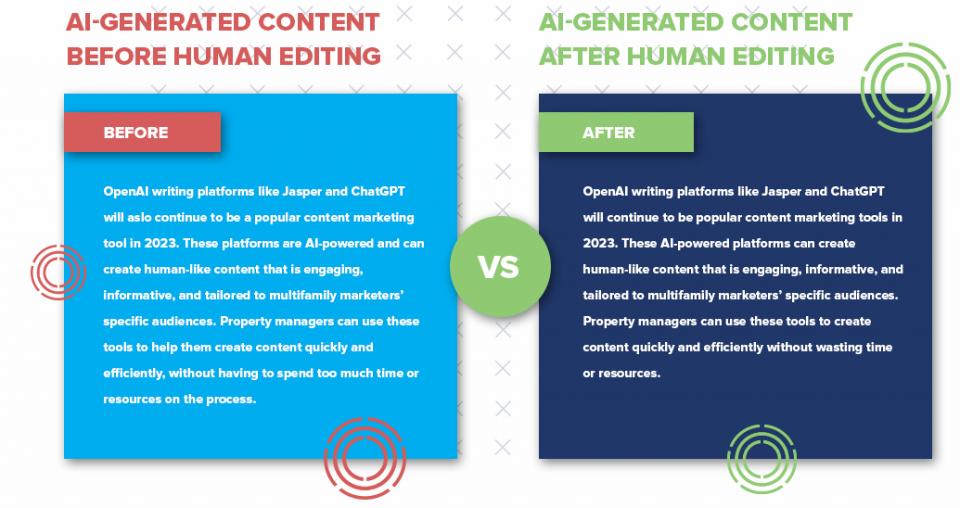
The problem starts when AI is used to mass-produce thin, repetitive, or low-value pages that do not answer user intent properly. Content like that can struggle to rank because it lacks the originality, depth, and trust signals search engines look for.
Google’s official position is that AI-generated content is not automatically against its guidelines if it is created to help users rather than manipulate rankings. The focus is on whether the page is useful, trustworthy, and written for people first.
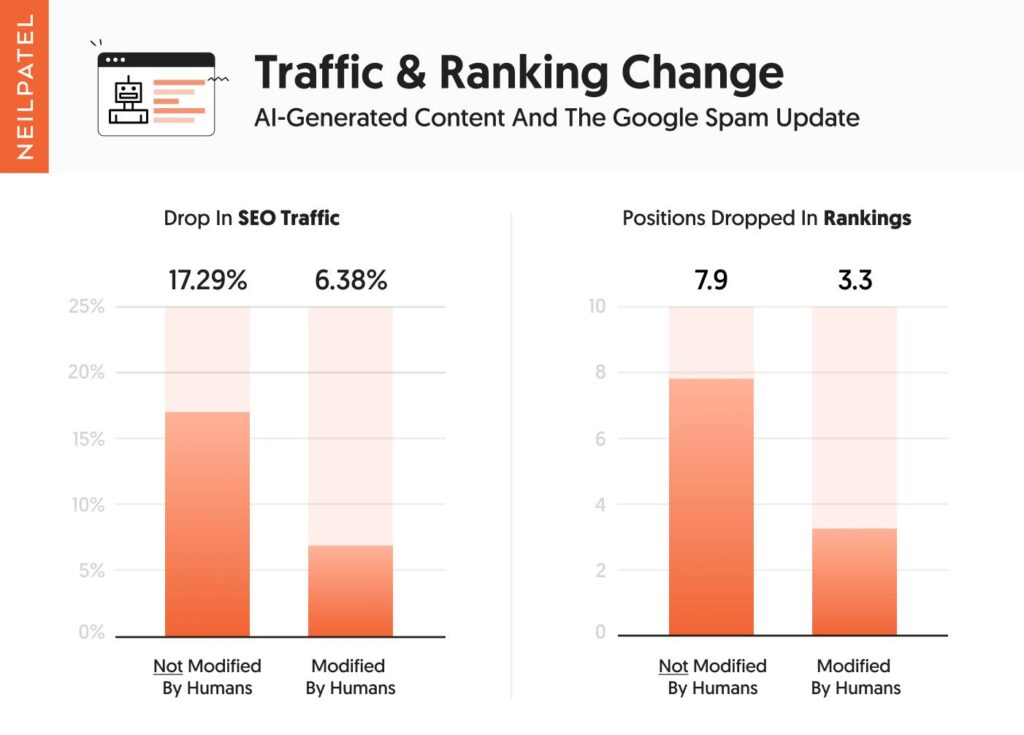
On the other hand, AI content that sounds generic or lacks depth can underperform because it blends in with thousands of similar pages. Search engines reward content that clearly solves a problem, offers a unique angle, and demonstrates strong relevance to the query.

The biggest risk is publishing content that looks polished on the surface but does not actually add value. That can lead to weak engagement, poor rankings, and in some cases visibility loss if the content is seen as spammy or scaled low-quality output.
Another risk is factual inaccuracy. AI tools can produce outdated or incorrect statements, so human review is necessary before publishing anything that depends on precision, credibility, or technical correctness.
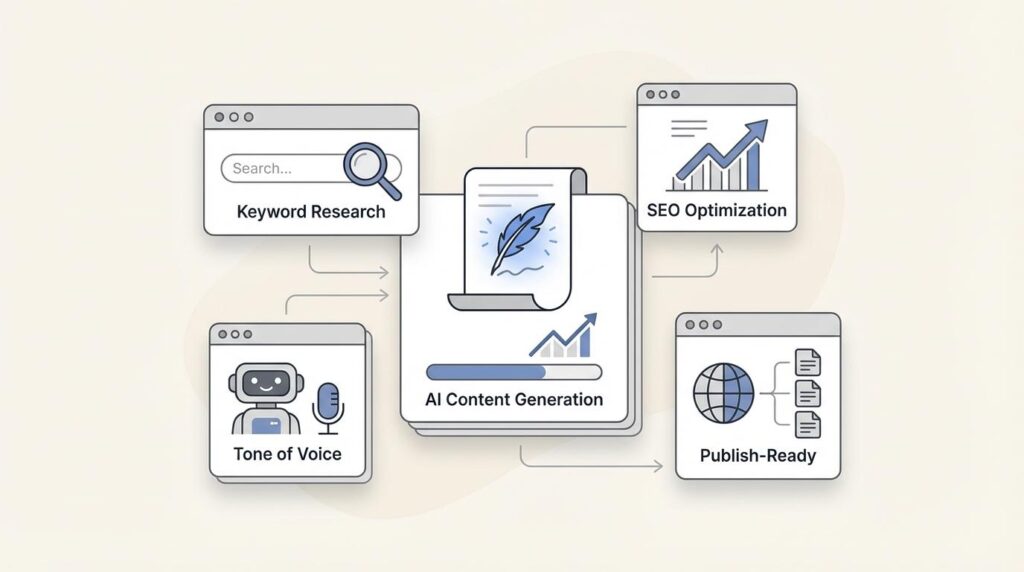
Before prompting AI, define what the reader wants, what problem they are trying to solve, and what the best-ranking pages are doing well. This helps you create content that is built around real search intent instead of just keyword matching.
AI is most useful for outlines, draft sections, headline ideas, summaries, and keyword expansion. It should support your workflow, not replace strategic decisions, fact-checking, or final editorial judgment.
Every AI draft should be reviewed for accuracy, clarity, tone, and originality. Add real examples, practical insights, and experience-based commentary so the content feels genuinely useful rather than machine-generated.
Once the content is edited, refine the title, meta description, headers, internal links, and keyword placement. That helps search engines understand the page and improves the user experience at the same time.
Use AI for drafts, outlines, and research support, not as the final publisher.
Add unique insights, examples, and brand perspective to make the content original.
Add unique insights, examples, and brand perspective to make the content original.
Avoid publishing large volumes of similar pages with minimal editing.
Align every page with a clear intent and a specific audience.
Treat AI as a productivity tool that helps you scale quality, not shortcuts.
Yes, it can be good for SEO if it is useful, accurate, and edited for quality. Google evaluates content based on value and relevance, not on whether AI was used to create it.
No, Google does not penalize content simply because it is AI-generated. It does, however, take action against low-quality or spammy content that tries to manipulate rankings.
Focus on search intent, fact-checking, originality, and strong on-page SEO. AI should help you draft faster, while humans should refine the final page for clarity and trust.
The main risks are generic writing, factual mistakes, and low-quality mass publishing. These problems can reduce trust and prevent the page from performing well in search.
Yes, if it is high quality and properly optimized. Well-edited AI content can perform competitively because rankings depend on usefulness, not the writing tool itself.
Use AI for research, structure, and drafting, then improve the content with human expertise, editing, and SEO optimization. That combination is the most reliable way to publish efficiently without hurting performance.
No, that is risky. Unedited AI content often lacks depth, accuracy, and originality, which can weaken rankings and trust.
SEO Strategist