
AI Search & GEO Strategy
If you only optimize for traditional search rankings, you’re only half visible in today’s AI‑driven search landscape. Generative Engine Optimization (GEO) ensures your brand appears inside the AI answer—not just below it—because AI search tools increasingly serve synthesized replies before any link is clicked.
This article explains:
What GEO is and how it supports visibility in AI driven search.
How GEO differs from—and complements—traditional SEO.
Practical GEO strategies your brand can start using today.
We’ll keep this focused on brands using AI‑driven search as a traffic and visibility channel, so you can apply GEO without overhauling your current SEO work.

May 27, 2026
12 Min Read
SEO Manufacture
Generative Engine Optimization (GEO) ensures your brand is cited inside AI generated answers, not just ranked on traditional SERPs.
AI driven search tools like Google AI Overviews, ChatGPT, Perplexity, and Gemini synthesize answers from multiple sources, changing how brands gain visibility.
GEO and traditional SEO overlap in tactics but differ in goals: SEO focuses on rankings and clicks; GEO focuses on citations and answer panel presence.
Strong GEO requires clear, structured, citation ready content, robust entity signals, and earned mentions across trusted sources.
Brands should start by auditing top traffic pages, optimizing 3–5 flagship “citation ready” pages, and building one strong AI SEO themed content cluster.
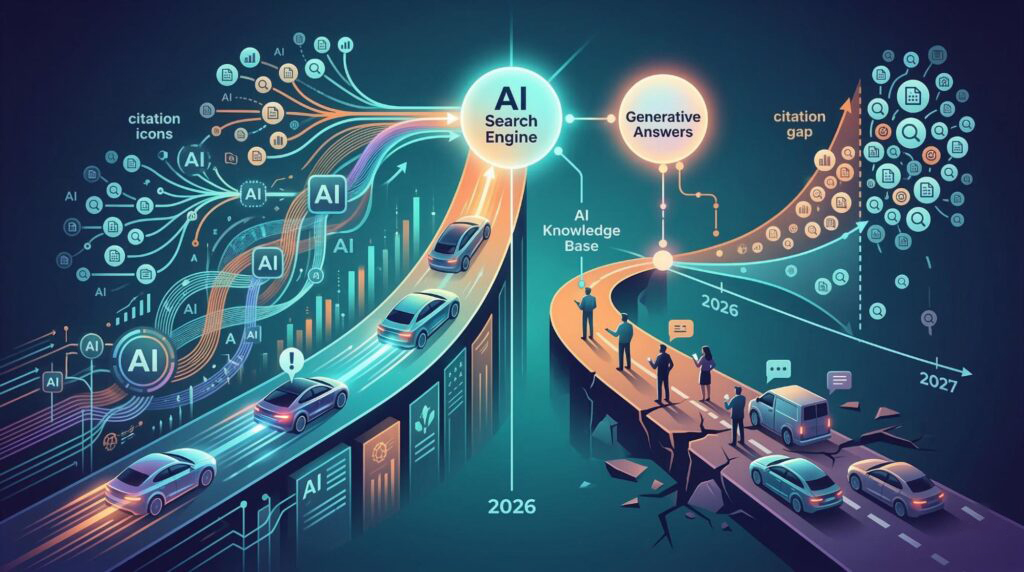
Generative Engine Optimization (GEO) is the practice of structuring and managing your digital content so that generative AI systems can easily retrieve, understand, and cite it when they answer user queries. It applies to tools like ChatGPT, Google Gemini, Perplexity, Bing Copilot, and Google’s AI Overviews in Search—all of which blend web results with their own language models to build answers.
What counts as a generative engine?
A generative engine is any platform that:
Takes a natural language query.
Pulls information from multiple web sources (and sometimes proprietary data).
Synthesizes those sources into a single, conversational answer, often with citations.
Examples include:
Google’s AI Overviews (in Search and Mobile)
ChatGPT, Perplexity, and Gemini when they answer questions and list web sources
Enterprise / SaaS level AI assistants that summarize answers from internal and external content
These tools are not just “new search boxes”—they’re answer engines that blend information, which is why visibility inside the answer now matters as much as SERP position.
Why AI search behaves differently
AI‑driven search doesn’t just rank pages; it builds answers from many sources, then selects which pages it trusts enough to reference. This means a site can rank high on Google but rarely appear in an AI answer—and vice versa.
A simple example:
Someone asks, “What are the best SEO practices for 2026?”
The model may pull insights from ten sources and synthesize them into 5–10 best practices, attributing them to 2–4 authoritative sites. Your page might rank position 1 organically, but if it’s not structured, clear, and trustworthy, it may not show up in that AI‑generated answer at all.
AI‑driven search is turning zero‑click and “answer‑first” behaviour into the norm, which changes how brands gain visibility. Instead of only needing organic clicks, brands now need to be referenced, quoted, or embedded inside AI‑generated replies.
Visibility inside the answer, not just on the results page
In traditional SEO, success is measured by:
Keyword rankings
Organic traffic
Click through rate from SERPs
In GEO‑driven visibility, success also includes:
Being cited in AI answers (with or without a direct link).
Appearing in AI generated summaries or “answer widgets” like Google’s AI Overviews.
Having your brand mentioned when AI tools summarize a topic or compare options.
This table shows why GEO is important: AI search is not abandoning rankings, but layering a new outcome on top of them—answer‑balance visibility.
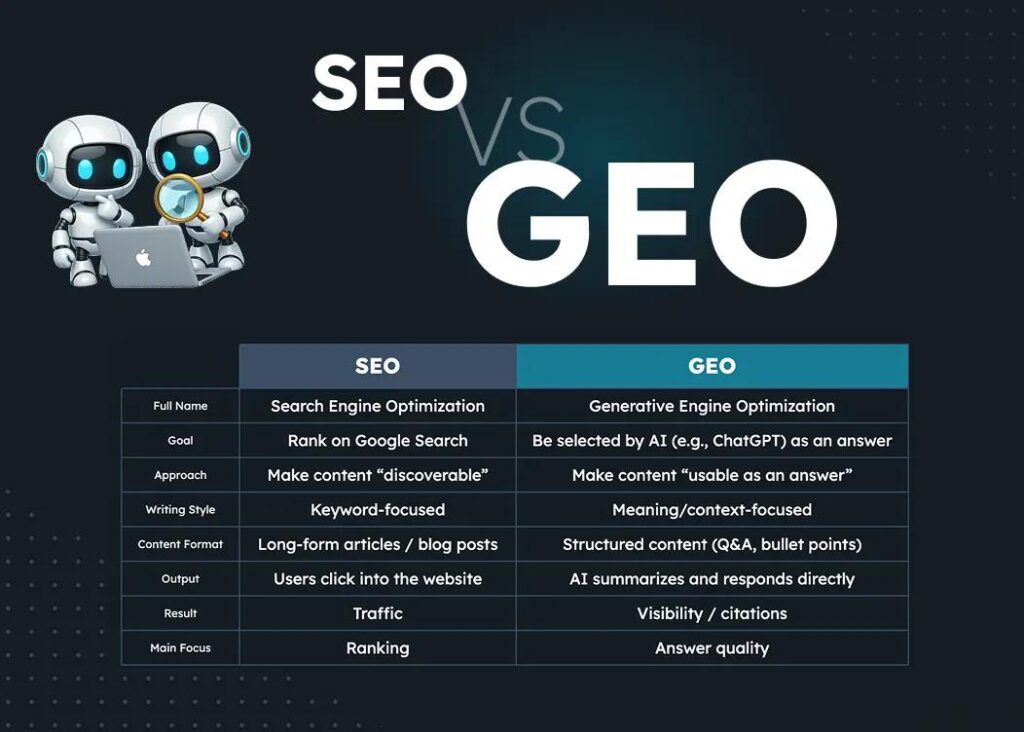
Generative engine optimization and traditional SEO are related but not the same. You can think of traditional SEO as “ranking for links” and GEO as “ranking for citations.”
Is generative engine optimization the same as traditional SEO?
No. GEO builds on SEO but optimizes for different outcomes and signals. Traditional SEO focuses on how a page ranks in a list of results; GEO focuses on how often a page is selected as a trusted source when AI systems generate answers.
Key differences:
Ranking vs being cited
SEO: “How high is my page on the SERP?”
GEO: “How often am I the source in the AI answer?”
Keywords vs context
SEO: Targets specific keyword phrases and search intent buckets.
GEO: Favors content that clearly explains concepts, entities, and relationships in natural language.
Links vs entity clarity
SEO: Thrives on backlinks and traditional authority signals.
GEO: Also rewards clear entities (brands, people, products), structured data, and consistent mentions across multiple trustworthy sources.
A growing body of research shows that AI search tools often prefer earned‑media and third‑party authority (e.g., niche publications, expert‑authored articles) over purely SEO‑optimized landing pages. That’s why GEO pushes brands to think beyond their own website and into how they’re referenced across the wider web.

In practice, generative engine optimization works by making your content easy for AI systems to:
Find (through indexing and semantic signals)
Understand (through structure and clarity)
Justify (through trust signals and citations)
AI‑driven engines don’t just “read” pages like humans; they scan for patterns, entities, and justification‑signals that help them decide which sources are reliable enough to quote.
AI systems love structured, scannable content, such as:
Clear headings and subheadings that answer questions (H2: “What is GEO?”; H3: “How GEO affects traffic”).
Clear headings and subheadings that answer questions (H2: “What is GEO?”; H3: “How GEO affects traffic”).
Explicit question and answer blocks (FAQs, “Can I…?” sections).
Using schema markup (e.g., FAQ, How‑to, Article) also helps AI systems parse your content and surface key bits of information.
Strong GEO emphasizes signals of trust, such as:
Author bios with expertise and external verification (e g., LinkedIn, bylines on other sites).
Original data, case studies, and clear sourcing for statistics or claims.
Consistent brand mentions and citations from reputable third party sites (press, industry blogs, directories).
Studies of AI search behavior show that AI services tend to favor authoritative, earned‑media sources over less‑trusted or purely promotional content.
GEO rewards topical depth and semantic clarity, not just keyword repetition. To work well with AI search:
Cover core topics comprehensively (e.g., create cluster style content around “AI SEO,” “GEO,” “answer engine optimization”).
Use related terms and entities naturally (e.g., “AI Overviews,” “LLMs,” “generative search,” “zero click queries”).
Align page content with likely conversational queries (“How does GEO work for brands?”).
For marketing and SEO teams, GEO is not about reinventing SEO—it’s about evolving your existing SEO‑led content strategy so it plays better inside AI answers. Here are practical GEO strategies for brands.
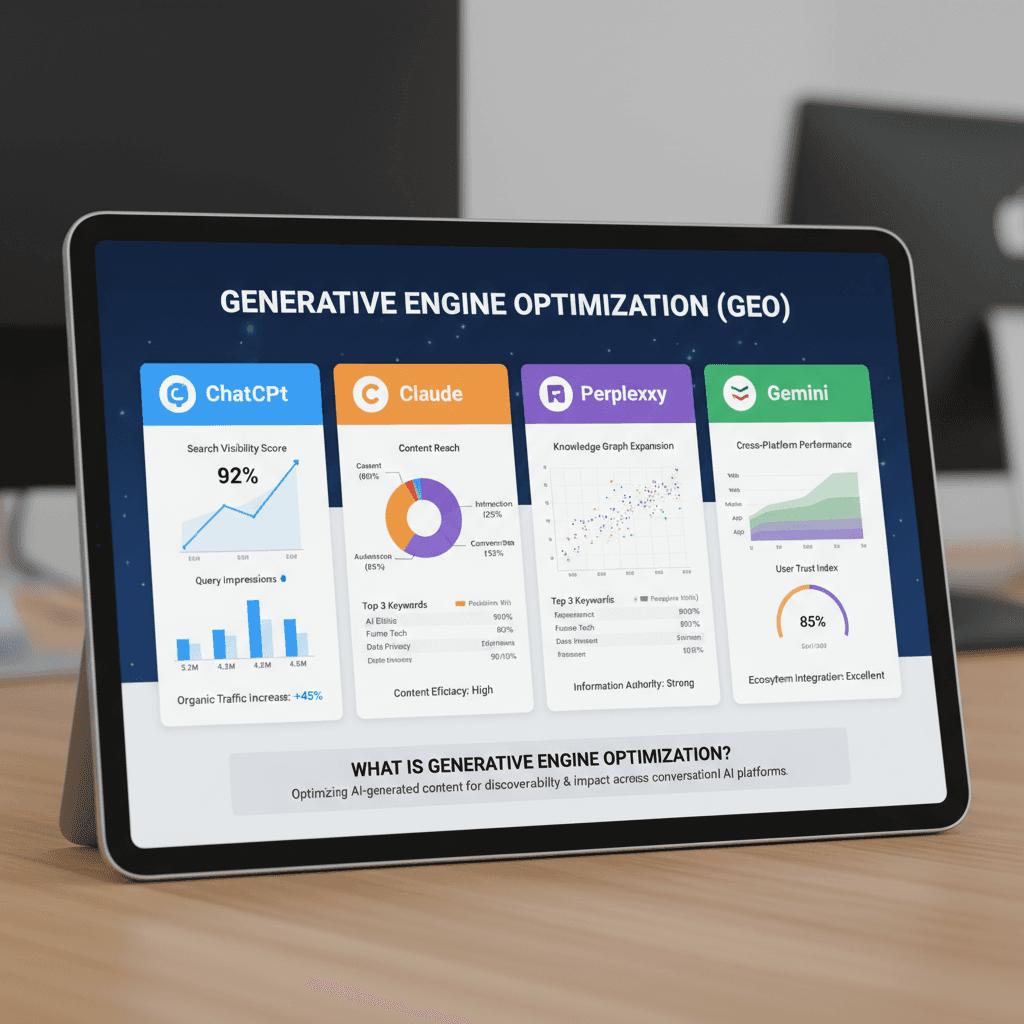
Make sure your key pages can be extracted as standalone answers by AI systems.
Open with a concise definition or explanation (who / what / why).
Follow with structured sections that answer common follow up questions.
Use bold key phrases that represent entities or concepts (e.g., Generative Engine Optimization, AI driven search).
These “citation‑ready” blocks are more likely to be pulled into AI‑generated summaries.
AI systems treat brands as entities, not just URLs. To be recognized as a brand authority:
Consistently use the same brand name, logo, and tagline across your site and external mentions.
Add structured data (Organization, Brand, LocalBusiness) where relevant.
Ensure your brand shows up in other authoritative sources (industry publications, directories, marketplaces).
The more AI systems see your brand as a stable, consistent entity, the more likely it is to be referenced in topic‑related answers.
Instead of scattering fragments of information, build topic‑centric clusters that fully explain a concept. For example:
Pillar: “AI SEO and Generative Engine Optimization.”
Cluster pages: “What is GEO?”, “GEO vs Traditional SEO,” “How to Optimize for AI Overviews.”
This structure helps AI systems see your site as a topical authority, increasing the likelihood of being cited when that topic is queried.
GEO‑driven visibility benefits from earned media and backlinks from high‑trust sites. Tactics include:
Contributing guest articles or expert commentary to industry blogs.
Getting listed in curated directories, marketplaces, or roundups.
Encouraging media coverage for product launches, case studies, or original research.
Each earned mention reinforces your brand as a credible source in the AI system’s knowledge base.
If your team is new to GEO, start with a lightweight implementation roadmap rather than a full‑scale overhaul.

Identify which pages already answer core customer questions clearly.
Add missing FAQs, structured data, and entity rich introductions.
Pick 3–5 pages that define your core service or product.
Rewrite intros and key sections to be “citation ready,” with clear headings and semantic structure.
Map out 5–7 content pieces around a single AI SEO related topic (e.g., “AI driven search and GEO”).
Link them logically and add internal schema markup.
Monitor which pages appear in AI generated answers (e.g., via seed queries in ChatGPT, Gemini, or Perplexity).
Double down on formats and topics that get cited and expand coverage there.
This approach lets you leverage GEO without abandoning SEO, treating AI‑driven search as a complementary layer of visibility.
Because AI‑driven search delivers synthesized answers before users click links, GEO ensures your brand is cited inside those answers, not just below them.
No. GEO reuses many SEO techniques but optimizes for citations and answer‑panel visibility, not just SERP rankings.
By structuring content so AI systems can easily find, understand, and justify referencing it—through clear headings, structured data, and strong trust signals.
SEO focuses on ranking pages; GEO focuses on being selected as a source when AI tools generate answers.
Because SEO‑optimized pages can still be ignored in AI‑generated answers if they lack semantic clarity, entity strength, and trust signals.
Create citation‑ready pages, strengthen entity signals, build topical clusters, and earn mentions across trusted sources.
No. GEO complements SEO; the two work together to keep brands visible both in traditional SERPs and in AI‑driven answers.
SEO Strategist
With over 10+ years of experience in SEO and digital marketing, the author specializes in driving organic growth and improving search visibility for businesses across various industries. Their expertise includes SEO, AI SEO, LLM SEO (Large Language Model Optimization), technical SEO, content strategy, on-page and off-page optimization, local SEO, eCommerce SEO, and AI-driven search optimization. With a strong focus on evolving search technologies and organic growth strategies, they help brands adapt to modern search ecosystems and achieve long-term digital success.