
Beginner's Guide to SEO

Jul 29, 2026
12 Min Read
What is website seo, in practice, comes down to four sequential steps keyword research, on-page/technical setup, landing page optimization, and measurement not one task done once.
Keyword research has to happen before any page gets written or edited; optimizing a page for the wrong term wastes the work that follows it.
Business website optimization doesn't require developer skills for the first pass title tags, meta descriptions, and Google Search Console setup are all things an owner can do directly.
Landing page optimization on your home, service, and contact pages matters more early on than blog volume, since these are usually the pages driving actual inquiries.
Website seo optimization is measurable from week one through Search Console, even though meaningful ranking movement typically takes longer.
Skipping straight to content or backlinks before keyword research and technical setup are done is the most common reason first-time SEO efforts stall.
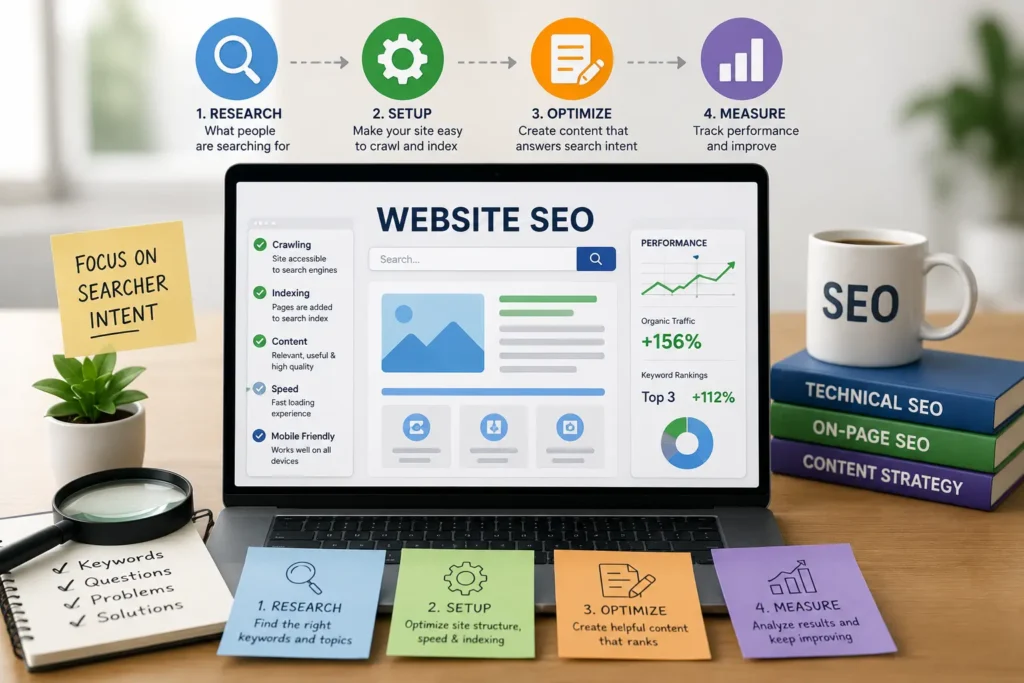
What is website seo, in practice, is the combined work of making a site easy for search engines to crawl, relevant to what people actually search for, and credible enough to rank above competing pages applied to your specific site, not treated as an abstract concept.
That means four things happen, roughly in this order: you figure out what your buyers actually search for, you set the site up so search engines can read it correctly, you make sure your most important pages answer those searches directly, and you check whether any of it is working.

Keyword research has to come first. Editing pages or writing content before this step means optimizing for a guess instead of a confirmed search term.
One page should own one primary term. Spreading the same keyword across five pages splits your own ranking chances instead of strengthening any single page.
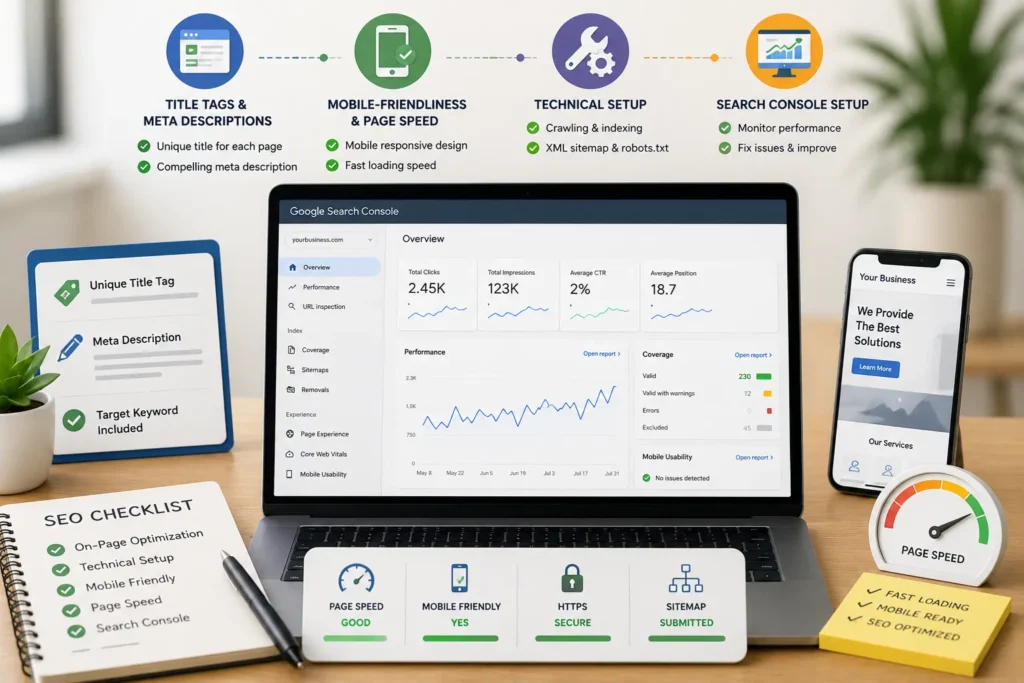
Once keywords are confirmed, technical and on-page setup makes sure search engines can actually read and correctly categorize each page the foundation seo for business website work depends on.


The last step is checking whether the first three actually worked and this is also where most first-time efforts quietly stop.
Check Search Console’s Performance report for which queries are already sending traffic, and compare that against the keywords chosen in Step 1. 4. Revisit your landing pages against actual search intent not just keyword presence and expand any page that’s thin relative to what’s ranking above it.
Website SEO is the work of making your site easy for search engines to crawl, relevant to what your buyers actually search for, and credible enough to rank above competitors. A business needs it because organic search is typically the highest-intent, lowest-cost-per-lead traffic source available once a site is set up correctly.
Start with keyword research to confirm what your buyers actually search for, then complete on-page and technical setup (title tags, mobile-friendliness, Search Console), then optimize your key landing pages against real search intent, and finally measure results and adjust. Skipping the order usually means redoing earlier steps later.
Keyword research comes first, before editing any page or writing new content. Optimizing pages before confirming which terms have real search volume and match buyer language means the work that follows is built on a guess rather than a confirmed target.
Match each landing page's content to the actual intent behind its target keyword pricing, service details, or a clear next step rather than just inserting the keyword into existing copy. Expand thin pages with specific details a generic page lacks, since search engines and readers both need more than a few sentences to evaluate.
Google Search Console and a free keyword tool like Google Keyword Planner cover the essentials for a first pass at website SEO optimization. Paid tools like Ahrefs or Semrush add more detail on competition and search volume, but they're not required to complete the four steps in this guide.
Search Console shows indexing and basic performance data within days of setup. Meaningful ranking movement from on-page and technical fixes typically takes four to eight weeks, while content and authority-building improvements usually take three to six months to compound into consistent, measurable traffic gains.
Yes, keyword research, on-page setup, Search Console configuration, and landing page optimization are all things a business owner can complete directly using free tools. Whether outside help makes sense later usually comes down to available time and how quickly a business needs results, not whether the work is technically possible in-house.
SEO Specialist, Growth Naavik